
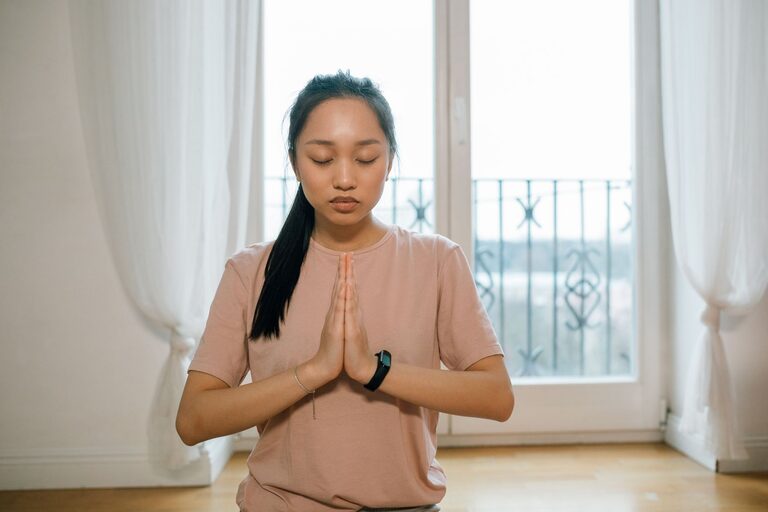
Taking a mindful breathing break is a simple way to pause during a busy day. It does not require special equipment, a quiet room, or a large block of free time. With a few intentional breaths, you can create a small space between one task and the next.
Mindful breathing is not about forcing yourself to feel calm or clearing your mind completely. Instead, it means paying attention to your breathing as it happens. You notice the movement of each inhale and exhale, then gently return your attention when your mind wanders.
For beginners, the most important goal is consistency rather than perfection. A one-minute breathing break can be useful when practiced regularly.
What Is a Mindful Breathing Break?
A mindful breathing break is a short pause during which you focus on your natural breathing. You may notice the air moving through your nose, the rise and fall of your chest, or the movement of your abdomen.
The practice usually has three basic parts:
- Pause what you are doing.
- Notice your breathing without trying to control it.
- Return to your activity with a little more awareness.
Your thoughts may continue to appear while you practice. That is normal. Mindfulness does not require an empty mind. Each time you notice that your attention has wandered and bring it back to your breath, you are practicing.
Start With One Minute
A common beginner mistake is setting an ambitious goal right away. You may decide to practice for 20 minutes, miss a few days, and then stop altogether. Starting with one minute makes the habit easier to repeat.
Try this simple exercise:
- Sit or stand in a comfortable position.
- Let your shoulders drop naturally.
- Notice one complete inhale.
- Notice one complete exhale.
- Continue for five to ten breaths.
- When the time is up, return to your task slowly.
You do not need to breathe deeply or dramatically. Let your breathing remain comfortable and natural. The purpose is to observe, not to perform.
Choose a Comfortable Position
You can practice mindful breathing almost anywhere. Choose a position that helps you stay alert and relaxed.
Good options include:
– Sitting in a chair with both feet on the floor
– Standing near a desk or window
– Sitting on a bench outdoors
– Resting comfortably at home
– Walking slowly while noticing your breath
Keep your posture natural. You can sit upright without making your back stiff. If you are standing, allow your knees to remain soft. If you are walking, keep your pace easy and safe.
There is no single “correct” posture. Comfort and awareness are more important than appearance.
Use a Simple Point of Focus
Breathing can feel abstract at first, so it may help to choose one specific place to notice it. You might focus on:
– The air moving at your nostrils
– Your chest rising and falling
– Your abdomen expanding and relaxing
– The rhythm of your breathing
– The brief pause between breaths
Pick one point and stay with it for a few breaths. If the sensation becomes less noticeable, gently explore another point. Avoid judging whether your breathing feels right or wrong. You are simply gathering your attention around a steady, familiar process.
Let Your Breathing Stay Natural
Many people begin to change their breathing as soon as they start paying attention to it. This is common. If you notice that you are taking unusually large or fast breaths, relax your effort and allow your breathing to return to its usual pattern.
A helpful reminder is: “I am noticing my breath, not managing it.”
You can also use a quiet mental label, such as “in” while inhaling and “out” while exhaling. This gives your mind a simple task without requiring you to control the pace.
If a breathing exercise feels uncomfortable, stop and return to ordinary breathing. You can also shift your attention to your feet on the floor or the sounds around you.
Expect Distractions
Distractions are part of the practice, not evidence that you are doing it incorrectly. You may think about an upcoming meeting, a message you need to send, or something that happened earlier in the day.
When you notice your mind has wandered, follow these three steps:
- Recognize the distraction.
- Avoid criticizing yourself.
- Bring your attention back to one breath.
You may repeat this process many times during a short break. Each return is a moment of practice. There is no need to restart the exercise or become frustrated with yourself.
Connect Breathing Breaks to Daily Routines
A regular cue can make mindful breathing easier to remember. Attach your break to something you already do each day.
For example, practice:
– Before opening your email
– After finishing a phone call
– Before starting a new task
– While waiting for a webpage to load
– After drinking water
– Before eating lunch
– When leaving work
– Before beginning an evening activity
You can also set a quiet reminder on your phone or computer. Keep the reminder simple, such as “Pause and breathe.” The purpose is to support awareness, not create another demand on your schedule.
Try Different Lengths
Once one-minute breaks feel familiar, experiment with different time periods. A short break may work best during a busy morning, while a longer pause may fit into a quiet afternoon.
Consider this flexible pattern:
One-minute break
Notice five to ten natural breaths. This is useful between tasks.
Three-minute break
Spend one minute noticing your posture, one minute observing your breathing, and one minute noticing how you feel before returning to your day.
Five-minute break
Settle into a comfortable position and observe your breath for several minutes. When your attention wanders, gently return to the breath.
The best length is one you can practice consistently. A brief break that happens regularly is often more practical than a longer session that feels difficult to maintain.
Create a Supportive Environment
You do not need silence, but reducing unnecessary distractions can help. Put your phone on silent, close an unused browser tab, or step away from your workspace if possible.
If your environment is noisy, use the sounds as part of the exercise. Notice them without trying to identify or judge each one, then return your attention to breathing.
Some people prefer practicing near a window, outdoors, or in a familiar chair. Others enjoy a short breathing break while walking. Test a few settings and choose the one that feels easiest to repeat.
Keep Expectations Realistic
Mindful breathing is not a way to guarantee a particular mood. Some days may feel focused, while other days may feel restless or ordinary. Both experiences are normal.
Try not to measure success by whether you feel completely relaxed afterward. Instead, ask:
– Did I pause for a moment?
– Did I notice my breathing?
– Did I return when my attention wandered?
– Can I make space for another short break later?
These questions focus on the process rather than a specific result.
A Simple Breathing Break to Try Today
The next time you finish a task, pause for one minute. Sit or stand comfortably and notice five natural breaths. Feel the movement of breathing without trying to change it. When thoughts appear, acknowledge them and return to the next breath.
At the end, notice your surroundings. Feel your feet on the floor, look around the room, and continue with your day.
Mindful breathing breaks are small, flexible habits. By keeping them comfortable, brief, and easy to repeat, you can make moments of awareness a natural part of your daily routine.